




Hearing

Allergy

Sinus

Sleep

Aesthetics




Hearing loss doesn’t just mean someone needs to turn up the TV or ask “Can you repeat that?” It has also been linked to an increased risk of dementia.

The doctors at Midwest ENT & Allergy know parents have concerns when their child seems to be suffering. Dr. Todd provides answers to six common questions parents have when it comes to testing kids for allergies

Hearing Screenings
If you are experiencing signs of hearing loss, call us today for your hearing screening! Find a baseline for your hearing and receive expert evaluation and care for your hearing health.
The Digital Age and Hearing Loss
How Emerging Technology and Stylish Hearing Aids are Reducing Stigma
By Jennifer Dumke | Sioux Falls Woman
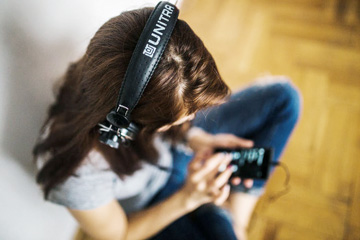 Just take a short walk and you’ll likely notice the popularity of pedestrians wearing headsets, Bluetooth devices, wireless earbuds and other ways to connect to mobile devices or music. In fact, most of the general population has become accustomed to either wearing in-ear devices or seeing them frequent the streets and shopping malls. So, what’s the big deal about wearing a hearing aid? That question is getting asked more and more often making it easier for those who struggle with hearing loss to cope with the adjustment of wearing a hearing aid.
Bob Froke, MA, CCC-A is a licensed audiologist at Midwest Ear, Nose and Throat and has worked with patients for over three decades and sees first-hand the advancements made in hearing aid technology. “With the onset of the digital revolution, not only are we seeing improvements in communication and home technology but hearing aids have also come a long way.” Having personally worn a hearing aid for over 4 years, Froke goes on to say how integrating with technology to stream music and connect with mobile devices significantly reduces the stigma for those needing hearing aids. “In general, society has become acclimated to using and relying on external devices.”
Myth Busting: 4 FACTS About Your Hearing Health
 Is hearing loss just an inevitable part of growing older? Can a simple sound amplifier take the place of hearing aids? Is there nothing I can do about that ringing in my ears? Common myths and misconceptions can sometimes get in the way of continuing the journey to better health. We’re busting a few myths with some helpful facts. Read on, and get empowered to improve your hearing today.
Myth:
Hearing impairment simply comes with aging.
Fact:
“Age is the strongest predictor of hearing loss among adults aged 20 to 69,” according to the National Institute on Deafness and Other Communication Disorders, but did you know that some 2 to 3 of every 1,000 U.S. kids enter the world with a detectable impairment in one or both ears? Plus, noise-related hearing damage — a common, cumulative and preventable public-health problem — widely affects adults and youth.
What We Know About Hearing Loss and Alzheimer’s
It’s the brain that controls hearing, but it needs good signals from the ears. With this said, aging adults with mild, moderate and severe hearing loss are more at risk to develop Alzheimer's disease and dementia. According to recent studies, scientific proof even puts hearing loss and the dementia connection above other factors such as diabetes, high blood pressure, age, sex and race.
Jane O'Connell, Aud, CCC-A, FAAA, has worked as an audiologist since 1988 and is currently working with patients at Midwest Ear, Nose and Throat Hearing Center. Throughout her career, she has encountered many patients who have had Alzheimer's or other forms of dementia in addition to their hearing loss.
And although the reason people with hearing loss are more likely to develop dementia is unknown, O'Connell says there have been some breakthroughs to uncovering the connection. "One thought is that the increased cognitive load that occurs from having to "de-code" words, which arrive in the brain with missing parts brought on by hearing loss, reduces the cognitive reserve or resiliency, placing them at higher risk for dementia.
Since Alzheimer's and dementia are not treatable conditions, this gives new hope for a better quality of life if hearing loss is detected. "Once a medically treatable condition has been ruled out, a hearing aid is often the best and only treatment for hearing loss" says O'Connell. "Hearing aids, of course, are not a treatment for Alzheimer's disease. The goal with hearing aids is to restore as much of the spectrum of hearing for conversational speech as possible."